Japanese Soil Wisdom

Healthy soil isn't a product. It's a cycle.

HS-2® PRO is a water-soluble soil amendment inspired by the natural organic matter cycle found in Japanese forests — and in the Satoyama landscapes that people have tended, without exhausting them, for generations.

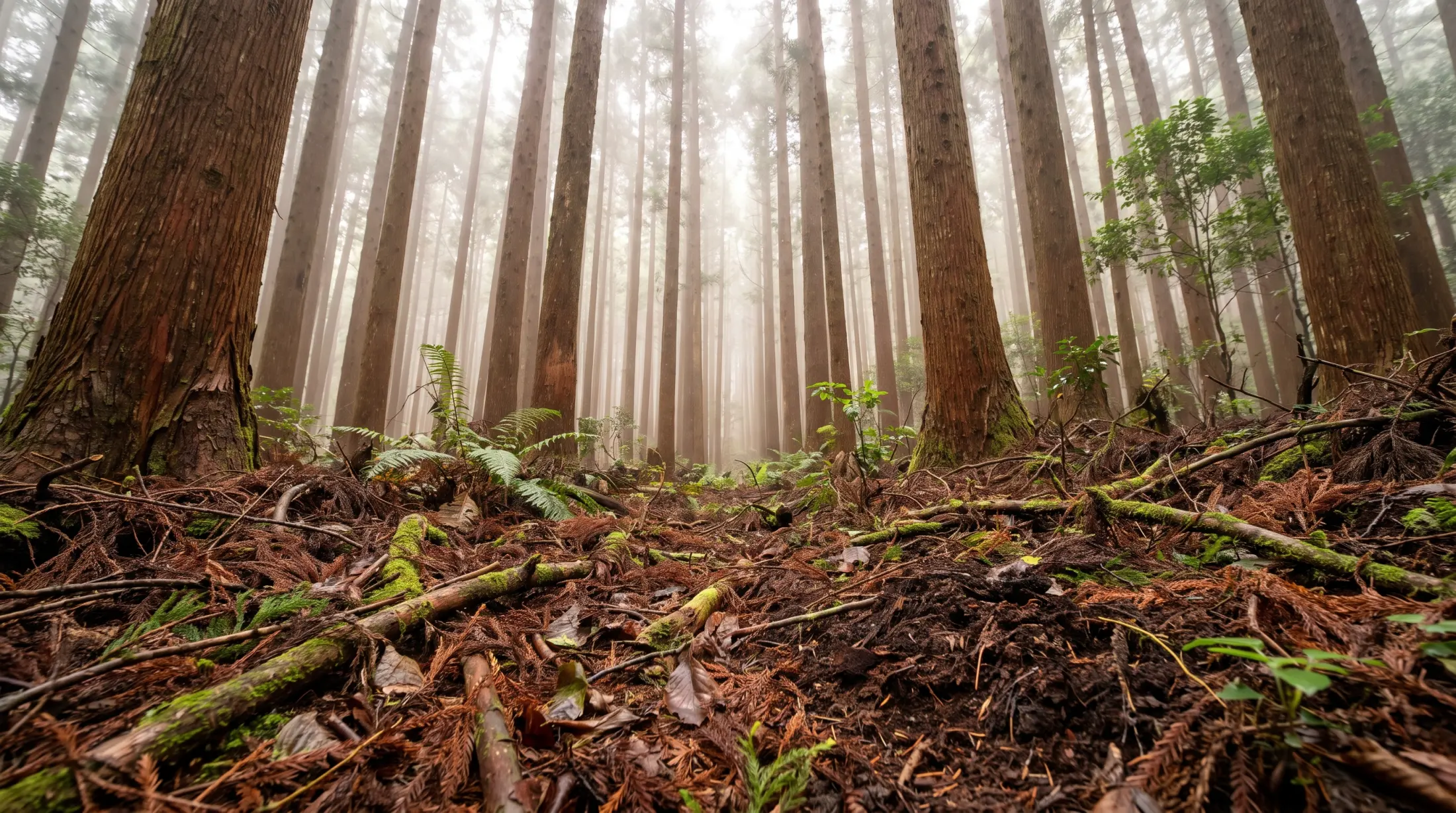
The floor of a Japanese cedar and hinoki forest in morning mist: tall straight trunks, a deep layer of fallen reddish-brown needles, and dark crumbly soil showing through.
A cedar and hinoki forest floor. Everything HS-2® PRO does starts here — not with the trees, but with what happens to the needles after they fall.

The Idea

Humus is not plant food. It's the system that feeds plants.

“Humus is good for soil” is one of the most repeated claims in gardening, and one of the least explained. So let's be precise about it.

Humus is not a nutrient source the way a nitrogen or phosphate fertilizer is. Plants don't take it up in quantity. What it does is set up the conditions in which nutrients become available, stay put, and keep circulating.

If fertilizer is the meal, humus is the digestive and circulatory system that decides how much of that meal ever reaches the plant.

That distinction matters commercially, too. It's the reason a soil can test adequate in nutrients and still grow poorly — and the reason feeding harder rarely fixes it.

The Science

Three jobs humus does in soil

Modern soil science has moved away from “humus feeds the plant.” The working model today runs through the soil, not around it.

The older view

Humus Plant

Humus feeds the plant. Add more of it and the plant gets more.

The current view

Humus
  • Soil structure
  • Microbial life
  • Nutrient cycling
Plant

Humus builds and maintains the system that feeds the plant. Every route to the plant runs through the soil.

1

A chemical sponge

Humic substances carry carboxyl (–COOH) and phenolic hydroxyl (–OH) groups, which are negatively charged at soil pH. They attract and hold cations — potassium (K+), calcium (Ca2+), magnesium (Mg2+), ammonium (NH4+).

This is cation exchange capacity, or CEC. Sandy soils are low in CEC, so nutrients leach straight through. As organic matter rises, CEC rises, and the soil holds more of what you give it.

2

A structural binder

Humus binds clay particles, microbes and fungal hyphae together into aggregates — the crumbs you can see and feel in good soil.

Aggregated soil resolves what sounds like a contradiction: it drains freely and holds water, while staying open to air. Nutrient retention alone won't grow a crop if the soil is compacted or anaerobic.

3

A habitat

For bacteria, actinomycetes, mycorrhizal fungi and filamentous fungi, humus is shelter, energy source and buffer at once.

Which is why it's fair to call humus the infrastructure of the soil ecosystem — the thing the biology is built on rather than the thing it consumes.

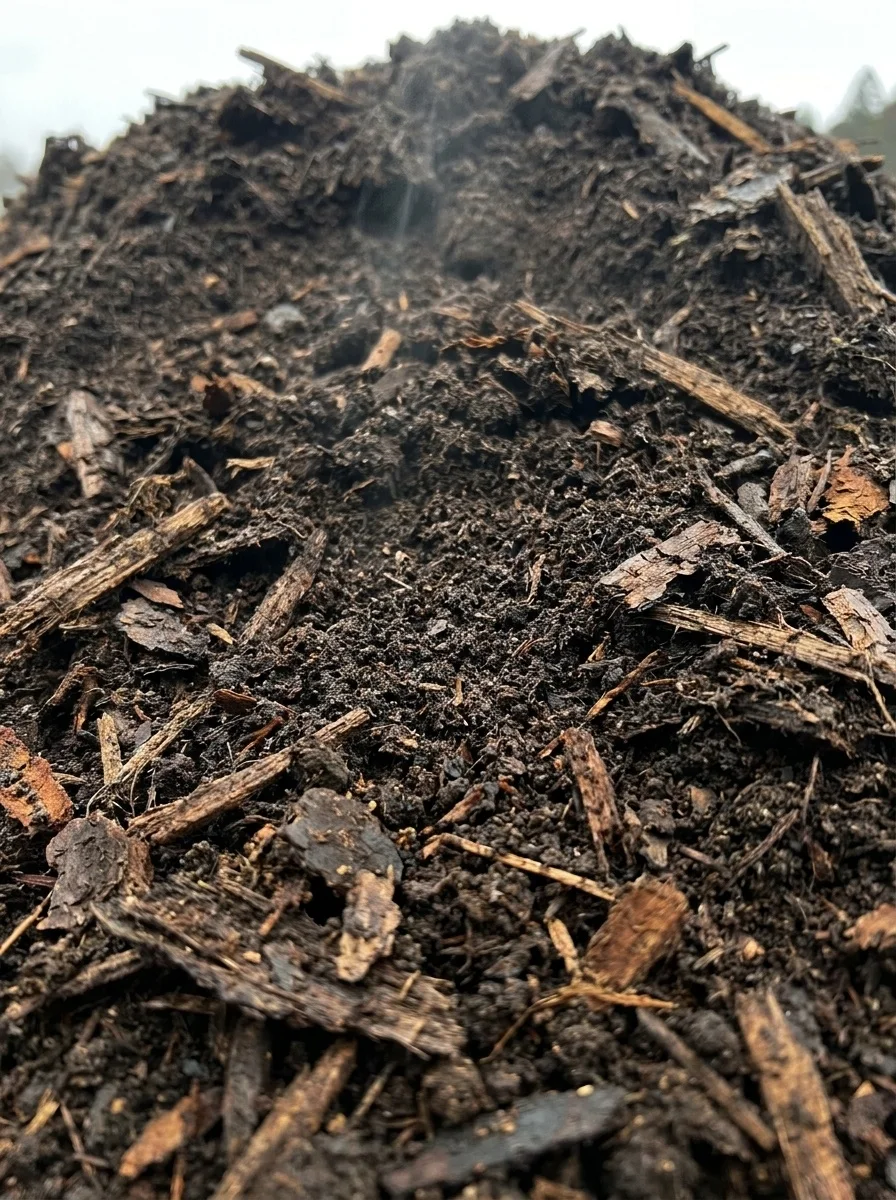
A double handful of dark garden soil broken into rounded crumbs, with visible pore spaces between them and fine pale roots threading through.
Aggregates, up close: rounded crumbs with air spaces between them, held together by organic matter, fungal threads and fine roots. This is the structure that lets a soil drain and hold water at the same time.

And in practice? What gardeners and growers actually notice is almost never a number on a soil test. It's crumb, moisture, and how the ground works under a fork.

Our Approach

Most humic products bring you the humus. We looked at what moves through it.

This is the one technical difference worth understanding about HS-2® PRO, and it's a difference of thinking, not just of process.

Conventional humic products

Conventional humic products: a one-way sequence A straight vertical line with five stops, ending at a solid terminal block: a humus deposit such as leonardite, mined, dried and ground, alkali extracted, and finally a humic acid product. Nothing returns to the start. Humus deposit leonardite Mined Dried & ground Alkali extraction Humic acid product

The line ends. A deposit is a finite thing you take from.

The idea: find humus, then pull one specific component out of it.

HS-2® PRO

HS-2 PRO: a fraction tapped from a running cycle A closed loop turning clockwise through five stages of the humus cycle: leaf litter, microbes and fungi, humus, the water-soluble fraction, and the rhizosphere, then back to leaf litter. A branch leads off the water-soluble stage to HS-2 PRO, while the loop itself continues turning. the humus cycle Leaf litter Microbes & fungi Humus Water-soluble fraction the part that travels Rhizosphere HS-2® PRO

The loop keeps turning. We draw from a cycle that renews itself.

The idea: look at the part of the humus cycle that is actually in motion.

What “in motion” means

On a forest floor, nothing sits still. Organic matter is continuously broken down, rebuilt, dissolved and carried downward to the roots. The soluble fraction is the part of that cycle that travels.

HS-2® PRO is drawn from that stage — not the deposit, but the fraction in transit.

Diagram: a cross-section through a forest floor. Cedar and hinoki trunks stand above a layer of fallen needles; beneath it a dark humus layer; below that, soil in which droplets of dissolved organic matter travel downward past branching roots.
The same forest floor, in section. The photograph above shows the surface; this is what the litter layer becomes underneath it, and where the soluble fraction goes.

What we don't claim

Forest soil contains thousands of organic compounds, microbial metabolites, enzymes, trace organic acids and living organisms. Nobody has fully characterized it — so nobody can honestly say they've bottled it.

HS-2® PRO is not a replica of forest soil, and we won't describe it as one. It is a product informed by how that system works. We'd rather tell you where the line is than sell you past it.

Our Story

Japanese forests. Satoyama. Generations of stewardship.

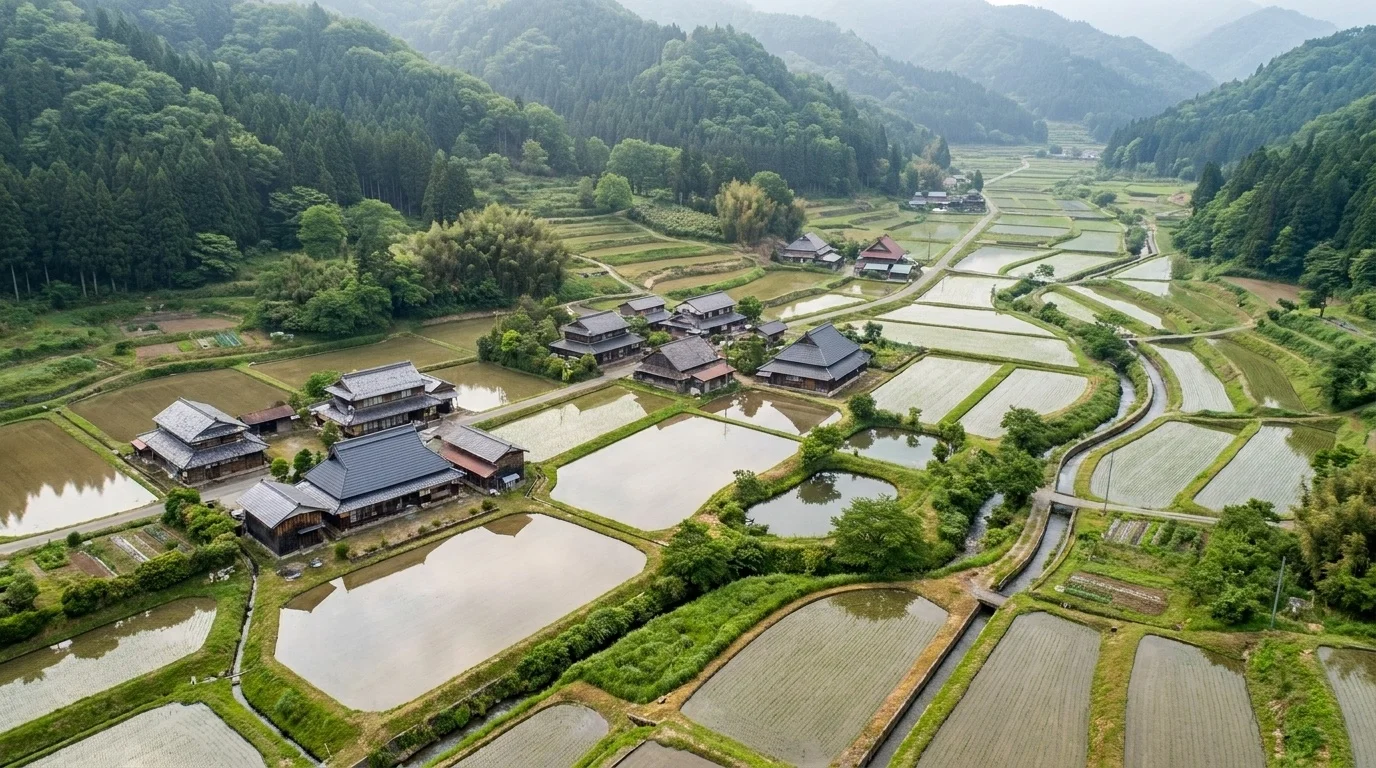
A Satoyama landscape in morning haze: flooded terraced rice paddies stepping down a hillside with earthen bunds between them, a stone-lined irrigation channel, traditional farmhouses at the edge of a cedar forest, and wooded ridges fading into mist behind.
Forest, farmland, water and village in one mosaic — worked continuously for centuries.

Satoyama is the Japanese word for the landscape where forest, farmland, water and village meet. It isn't wilderness and it isn't industrial agriculture. It's the long negotiation between the two — a mosaic that people have cut, coppiced, flooded, planted and harvested for centuries while keeping it productive.

You can't manage a landscape that way for that long by extracting from it. You do it by understanding the cycle you're standing in: what falls, what breaks it down, what carries it, and what takes it up again.

For generations, Japanese forests and Satoyama landscapes have demonstrated how healthy soil supports thriving ecosystems. HS-2® PRO was developed from this understanding of natural organic matter cycles.

We want to be careful about what that does and doesn't mean. We're not claiming Japanese soil is different, or better, or chemically special. We're saying that tending a landscape for centuries teaches you where to look — and that's what pointed us at the soluble fraction rather than the deposit.

At a glance

HS-2® PRO in brief

Product typeSoil amendment, water-soluble. Not a fertilizer and not sold as plant food.
Derived fromNaturally fermented organic matter from Japanese cedar (sugi) and hinoki cypress, water-extracted
Physical form[SPEC-02] liquid concentrate / soluble powder
Composition[SPEC-03] declarable analysis: total organic matter %, humic/fulvic content and test method, pH, specific gravity, EC, guaranteed analysis if any
Application[SPEC-04] dilution rate, method, frequency, per-market (garden / greenhouse / field)
Certifications[SPEC-05] OMRI / USDA-NOP input status, JAS or other Japanese certifications
US state registrationIn progress. Soil amendment registration is handled state by state, and we will not ship into a state before it is cleared. [SPEC-08] Update as states clear; keep this row honest rather than aspirational.
Available formats[SPEC-06] retail sizes and bulk formats with pack counts
Shelf life & storage[SPEC-07] shelf life, temperature range, freeze/thaw behaviour

Full technical documentation, including specification sheet, SDS and lot certificates of analysis, is available to trade and manufacturing partners on request.

Get in touch

Tell us what you're growing — or what you're building.

Whether that's a single raised bed or a production line, we'll point you to the right format, documentation and pricing.

[CONTACT-01] Contact channel to confirm — email address, phone, form endpoint, and which inquiries route where (consumer / wholesale / ingredient supply). If a form is preferred, specify the handler: Formspree, HubSpot, Netlify Forms, or a custom endpoint.