For home gardeners
Feed the soil, and it will keep feeding the garden.
Most garden products are aimed at the plant. HS-2® PRO is aimed at the ground it's standing in — the structure, the moisture, and the life that makes everything else work.
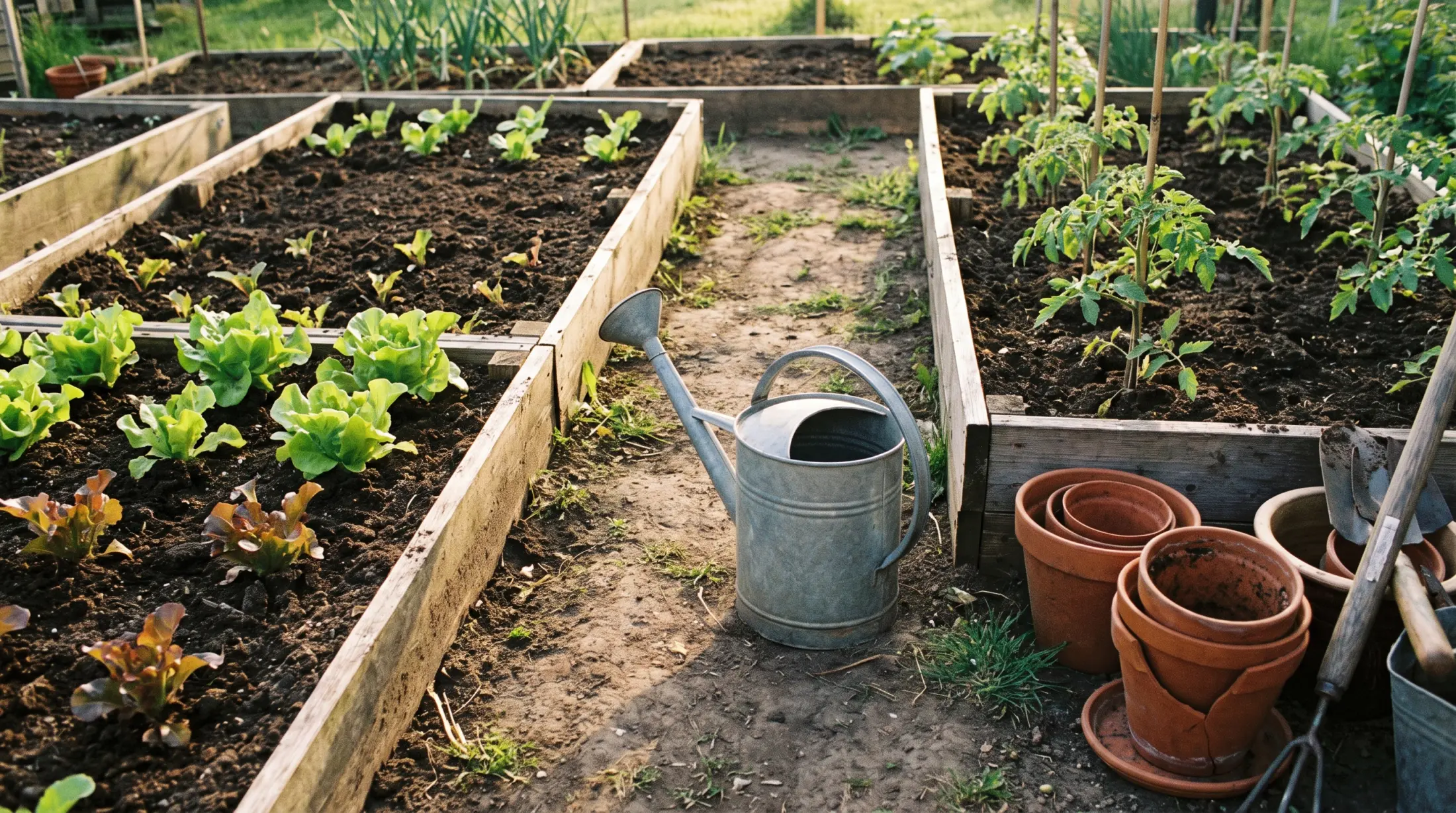
Sound familiar?
You're not short on fertilizer. You're short on soil.
It won't hold anything
Sandy or thin soil takes the water and the feed straight through. You're topping up constantly and it's gone by the weekend.
It won't let go of anything
Heavy clay that puddles after rain, then sets hard and cracks. Roots don't want to be in it and neither do you.
Containers go flat by midsummer
Potting mix that started open and crumbly ends up dense, grey and water-repellent by August.
These are all the same problem wearing different clothes: soil that has lost its structure and its biology. More fertilizer doesn't fix structure. That's a different job.
What it's doing down there
Three things, none of them glamorous
HS-2® PRO delivers the water-soluble organic fraction — the part of the forest floor's humus cycle that actually travels through soil to the roots.
Holds on to nutrients
Humic substances are negatively charged, so they grip the positively charged nutrients — potassium, calcium, magnesium, ammonium — that would otherwise leach away. Think of it as raising the soil's grip, not its nutrient content.
Helps soil form crumbs
Humus binds clay particles, microbes and fungal threads into aggregates. Aggregated soil is the reason a soil can drain freely and still hold water — and why it's pleasant to dig.
Supports soil life
Bacteria and fungi need habitat and an energy source, not just food for the plants above them. Organic matter is what they live in.
Straight answer: this is not a fertilizer
HS-2® PRO is sold as a soil amendment. It doesn't replace feeding your plants and it isn't plant food. It works on the soil that holds the food. Keep your normal fertilizer program — the point is that more of it stays where you put it.
[GARD-01] Have your US regulatory reviewer sign off on the claim language here. Soil amendment labeling is governed at state level, and every performance claim on this page needs substantiation on file. Note that state registration is still in progress.
How to use it
Mix, water, repeat.
No special equipment, no soil test required to get started.
-
Dilute
Mix [GARD-03] rate of HS-2® PRO into [GARD-04] volume of water in a watering can or hose-end sprayer.
-
Water it in
Apply to the soil surface around the base of plants until moist — roughly [GARD-05] volume per area. Soil, not leaves, is the target.
-
Repeat through the season
Every [GARD-06] interval during active growth. [GARD-07] any seasonal start/stop guidance
-
Keep feeding as normal
Continue your usual fertilizer routine. HS-2® PRO sits alongside it rather than replacing it.
Where it fits
Beds, borders, pots, patches
| Where | Rate | How often | Notes |
|---|---|---|---|
| Vegetable beds | [GARD-08] | [GARD-09] | [GARD-10] |
| Ornamental borders | [GARD-11] | [GARD-12] | [GARD-13] |
| Containers & hanging baskets | [GARD-14] | [GARD-15] | [GARD-16] |
| Lawns | [GARD-17] | [GARD-18] | [GARD-19] |
| Trees & shrubs | [GARD-20] | [GARD-21] | [GARD-22] |
| Houseplants | [GARD-23] | [GARD-24] | [GARD-25] |
Expectations
What to look for, and when
Soil change is slow and undramatic. We'd rather set that expectation now than have you looking for fireworks next Tuesday.
In the first few weeks
[GARD-26] Observable short-term changes, evidence-backed only — e.g. water penetration and wetting behaviour.
Over a season
[GARD-27] Medium-term changes — e.g. soil working more easily, crumb structure, moisture holding between waterings.
Year over year
[GARD-28] Long-term framing plus any trial data, before/after photos, or third-party results available for publication.
Every soil starts from a different place, so results vary with soil type, climate and what you're growing.
Sizes & where to buy
Pick a size
[GARD-29] size
Covers [GARD-30] area / no. of applications
[GARD-31] price
[GARD-32] size
Covers [GARD-33] area / no. of applications
[GARD-34] price
[GARD-35] size
Covers [GARD-36] area / no. of applications
[GARD-37] price
The containers above are schematic outlines, not the finished pack. [IMG-03/04/05] Replace with product photography on white once packaging is final.
Questions
Reasonable things to ask
Is this organic?
Can I use it with my existing fertilizer?
Can I overdo it?
Is it safe around pets and children?
What does it smell like?
How is this different from the humic acid product already on the shelf?
Does it come from Japanese soil?
How long does an opened bottle last?
One more thing
Curious where the idea came from?
The short version: people have kept Japanese Satoyama landscapes productive for centuries by working with the organic matter cycle rather than against it. That's the thinking behind this bottle.